

Digital Twin Technology: Revolutionizing Asset Integrity and Inspection
Introduction to Digital Twin in Industry
As industrial operations become more complex and data-driven, organizations are seeking smarter ways to monitor, assess, and maintain critical assets. One of the most transformative technologies enabling this shift is the Digital Twin—a dynamic, data-driven virtual representation of physical assets, systems, or processes.
When it comes to maintaining asset integrity and operational safety, insight is critical. Nexology supports this transformation by combining engineering expertise with data-driven approaches, helping clients move toward smarter, more reliable inspection and certification practices.
What Exactly is a Digital Twin?
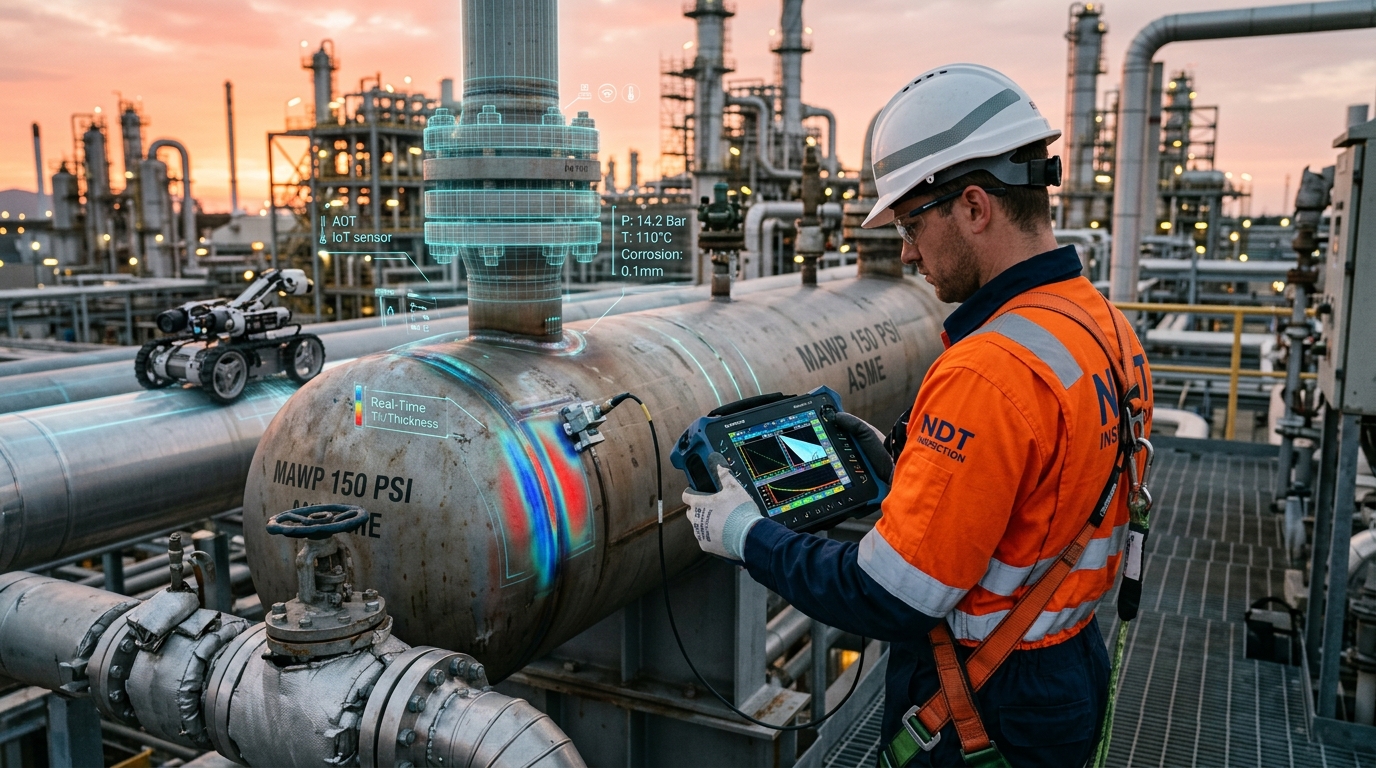
A Digital Twin is not just a 3D model; it is a virtual replica that mirrors a physical asset in real-time by integrating data from sensors, inspections, operational systems, and historical records. Unlike static models, a digital twin continuously updates, providing a live view of asset condition and performance.
In simple terms: A digital twin is a “living digital replica” of your equipment—constantly learning, updating, and reflecting real-world conditions.
How Digital Twin Technology Works
Digital twin systems combine multiple advanced technologies to create a seamless flow of information between the physical and digital worlds:
- Data Acquisition: Continuous input from IoT sensors, manual inspection data (NDT, API inspections), and operational parameters.
- Data Integration: Seamless connection with SCADA systems, maintenance management records, and engineering databases.
- Analytics & Modeling: Leveraging AI/ML models to perform degradation analysis and simulate future scenarios.
- Visualization: High-fidelity 3D models and interactive dashboards for real-time monitoring and decision support.
This integration allows engineers and inspectors to evaluate asset condition with greater accuracy and continuity than periodic inspections alone could ever provide.
Applications in Inspection & Certification
Digital Twin technology is redefining how we approach asset integrity:
1. Asset Integrity Management (AIM)
Continuous monitoring of equipment condition allows for real-time tracking of corrosion rates, fatigue, and other degradation trends.
2. Risk-Based Inspection (RBI)
Predictive models and historical data analysis allow organizations to optimize inspection intervals, focusing resources where they are needed most.
3. Predictive Maintenance
Early detection of anomalies allows for intervention before failures occur, significantly reducing unplanned downtime.
4. Regulatory Compliance
Enhanced traceability and automated documentation ensure alignment with API, ASME, and local regulatory requirements (such as Thailand’s Department of Labour Protection and Welfare).
5. Shutdown & Turnaround Planning
Simulating inspection scenarios within the digital twin improves efficiency, enhances safety protocols, and optimizes resource allocation during critical maintenance windows.
The Strategic Benefits
Implementing Digital Twin technology offers measurable advantages for industrial operations:
- Improved Safety: Early risk detection prevents catastrophic failures.
- Cost Reduction: Minimized downtime and optimized maintenance spending.
- Operational Reliability: Enhanced performance through data-backed decisions.
- Dynamic Planning: Inspection schedules that adapt to actual asset condition.
- Perfect Traceability: A complete, auditable digital history of the asset.
Practical Example: The Smart Storage Tank
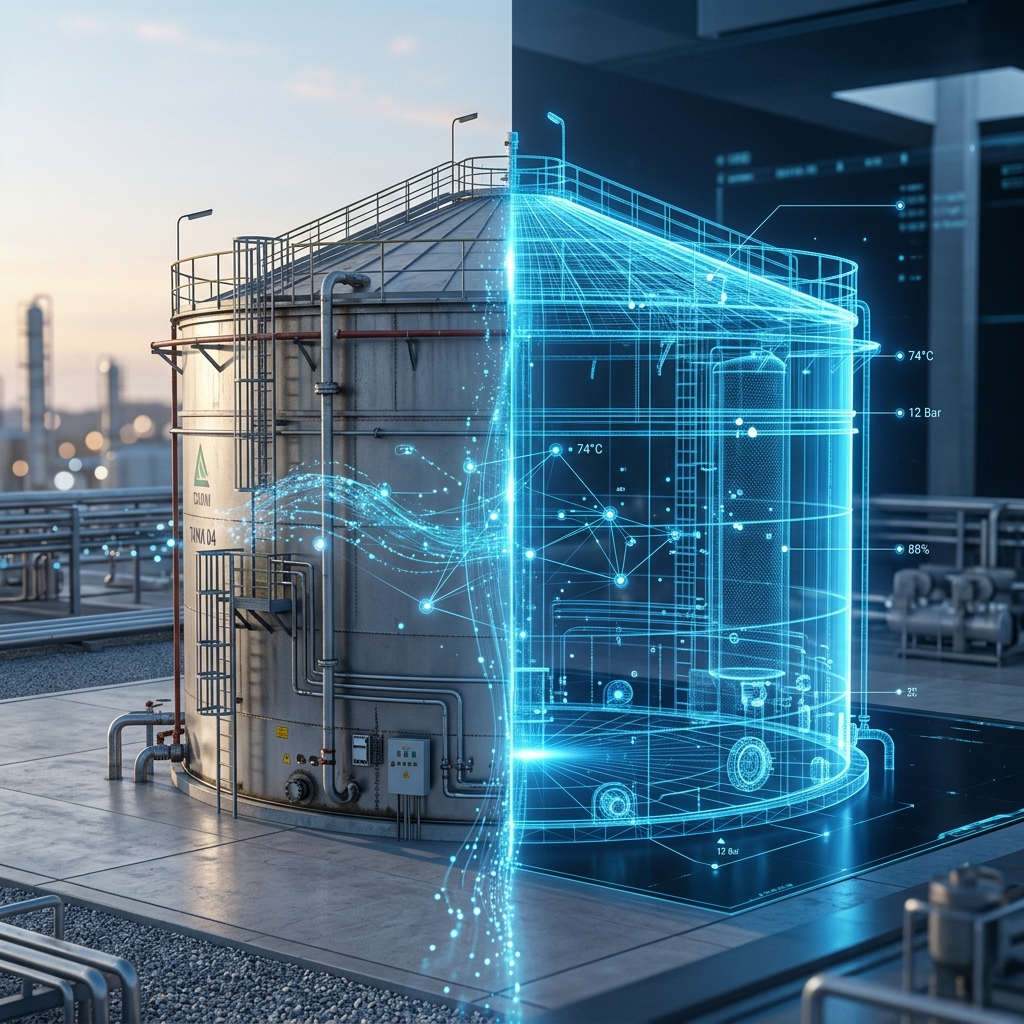
Consider a large-scale storage tank supported by a digital twin system:
- Real-time monitoring of operating pressures and thermal stresses.
- Integration of historical API 653 inspection data.
- Predictive assessment of wall thinning and estimated remaining life.
The Result: More accurate inspection planning, significantly reduced operational risk, and absolute confidence in regulatory compliance.
Conclusion: Enabling Smarter Inspection
Digital twin technology represents a significant advancement in inspection and asset integrity management. By bridging physical assets with digital intelligence, it enables continuous monitoring, improved decision-making, and enhanced operational performance.
At Nexology, we integrate engineering inspection practices with emerging digital technologies to support more efficient and reliable asset management. As industries evolve, adopting digital solutions such as digital twins will be key to maintaining safety, reliability, and compliance in increasingly complex environments.
Disclaimer: This article is provided for general informational purposes only. For specific applications, always refer to applicable API, ASME, and relevant local regulatory requirements, and consult qualified engineering professionals to ensure compliance and suitability for your operations.